

The first time I spoke with Joachim, I tried out the little Italian I learned at school.
He just laughed and told me they don't actually speak Italian there.
My reaction: what?! Turns out this corner of Italy speaks German — a legacy of Alto Adige/South Tyrol once belonging to Austria, and still very much its own thing culturally.
Unbelievable, and honestly the best possible way to be introduced to a winemaker.
That conversation is also why Reyter is the first — and so far only — Italian winemaker in the Vivan cellar. Everything about this domain felt like it deserved to be an exception to how we usually pick who joins us.
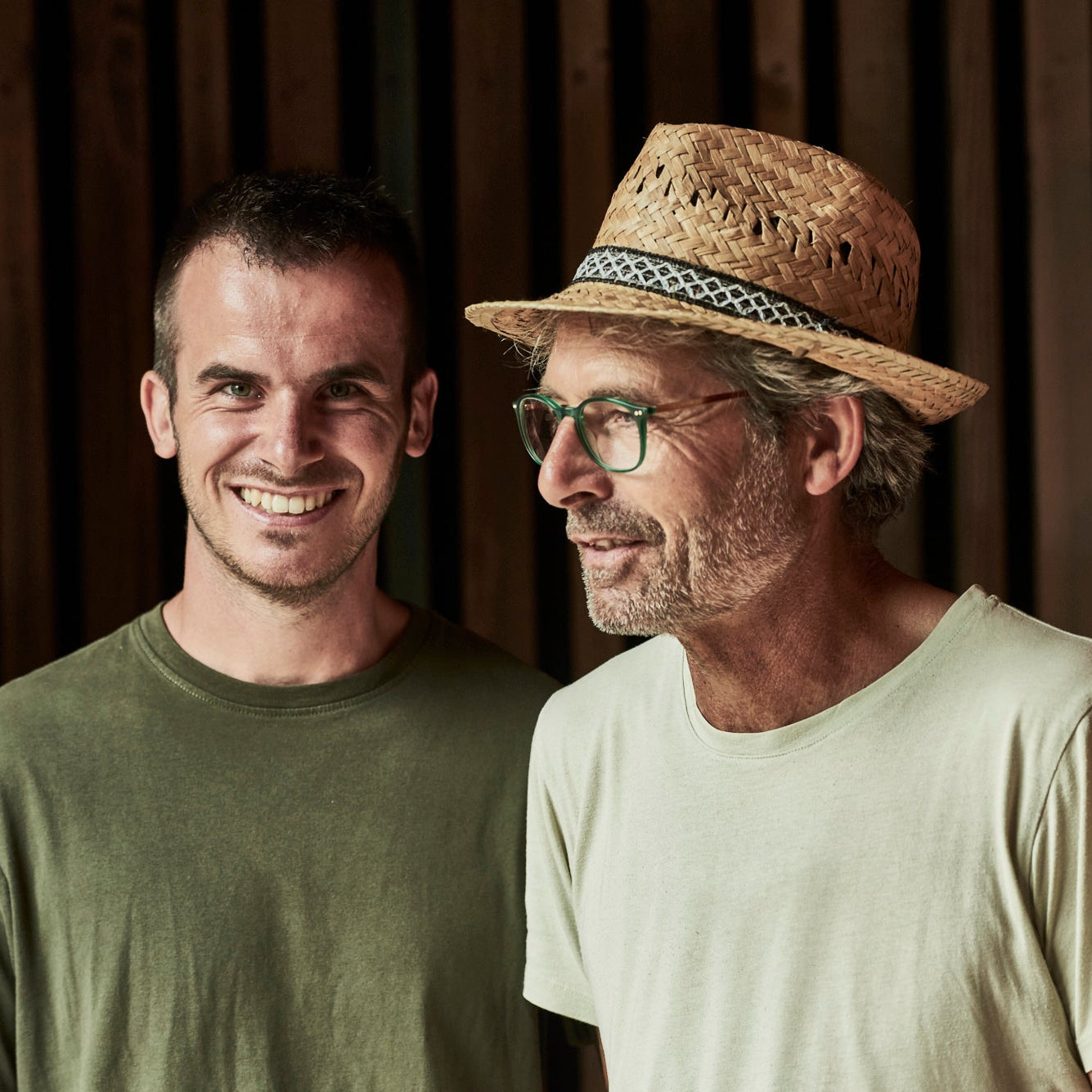
Rare vines, alpine soil
Christoph and Joachim Unterhofer farm a handful of small, high-altitude plots scattered across the Dolomite foothills — each one chosen for what it does, not for convenience:
- Their Lagrein comes from Gries, arguably the best site in Alto Adige for the variety, on Porphyry soil planted between 1960 and 1990.
- Their Schiava (Vernatsch) grows around Lake Caldaro, on limestone gravel, from vines planted between 1920 and 1940 — vines that are still bearing fruit a century on.
- The Chardonnay comes from St. Pauls.
- Pierrot, their white blend, is grown above Merano in Tirolo, at 400–600 metres — properly alpine, rare-varietal territory.
That's a genuinely unique spread of terroir for one small domain, and it's a big part of why no two Reyter wines taste alike.
A rare bet on disease-resistant grapes
Here's something you won't find explained on most wine labels: Pierrot is made from three grapes — Bronner, Muscaris and Souvignier Gris — that belong to a family called PIWI.
PIWI is short for the German Pilzwiderstandsfähige Reben, literally "fungus-resistant vines." They're bred by crossing classic European wine grapes (vinifera) with hardier American or Asian vines that naturally shrug off the two fungal diseases that plague almost every vineyard in a wet year — powdery mildew and downy mildew.
The result is a grape that still makes serious, drinkable wine, but doesn't need constant spraying to survive the season.
In practice, that's a big deal: a conventional variety can need a dozen or more fungicide/copper treatments in a difficult, wet vintage.
A PIWI vine can often get through the same season with just one or two — sometimes none. Less spraying means less copper and sulphur going into the soil, fewer tractor passes compacting the vineyard, and a lighter environmental footprint overall.
Bronner and Souvignier Gris were both bred at the same German viticultural institute in Freiburg — Souvignier Gris is even a cross that traces back in part to Bronner itself.
They're still genuinely rare in the wine world; most producers stick to familiar names like Chardonnay or Sauvignon Blanc.
Reyter, already committed to organic, low-intervention winemaking since 1996, chose to plant them anyway — which tells you a lot about where their priorities sit.
Organic since before it was fashionable
Reyter has been farming organically since 1996, long before "organic" was a marketing word. Christoph started making his own wine from Lagrein grapes in 2003, working alongside other low-intervention winemakers in the region to learn the craft. Joachim joined in gradually until the two ran the domain together.
In the cellar, they don't force anything: spontaneous yeast fermentation, natural malolactic fermentation, and gravity — not filtration — to settle the wine.
Their own words: "the grape comes as genuine as possible from the vine to the bottle and in the glass."
They also treat the land as shared habitat, leaning on the vineyard's natural wildlife to keep pests and soil health in balance rather than reaching for a spray.

The six wines
Each Reyter wine is independently reviewed by Wein Plus — and that matters more than most 90-point scores you'll see elsewhere.
Wein Plus tastes every wine blind, in a neutral room, with no producer or trade-fair tastings, and uses the original, strict version of the 100-point scale, where recommendable wines start at 80 — not the inflated version most critics use today, where barely anything scores under 85.
Wein Plus is one of the strictest critics in the business — while other reviewers hand out 90+ freely, Wein Plus makes wines earn every point.
- Rahm — Lagrein, 2017 — 88 WP. 24 months in tonneaux, deep and spiced.
- Lagrein — 2023 — 87 WP. The younger, brighter sibling — black and blueberry fruit, 10 months in big oak.
- Schiava — Vernatsch, 2019 — 88 WP. From those century-old vines — tart red berries, fine tannin, real salinity.
- Lakrez — Lagrein Rosé, 2020 — 90 WP, the highest-scoring wine in the case. Five years in bottle before release — rare for a rosé.
- Pierrot — Bronner, Muscaris & Souvignier Gris, 2020 — 87 WP. A rare blend of disease-resistant PIWI grapes, 18 months in big oak cask.
- Chardonnay — 2024 — 88 WP. Skin contact, spontaneous fermentation, 12 months in tonneaux.
Try all six
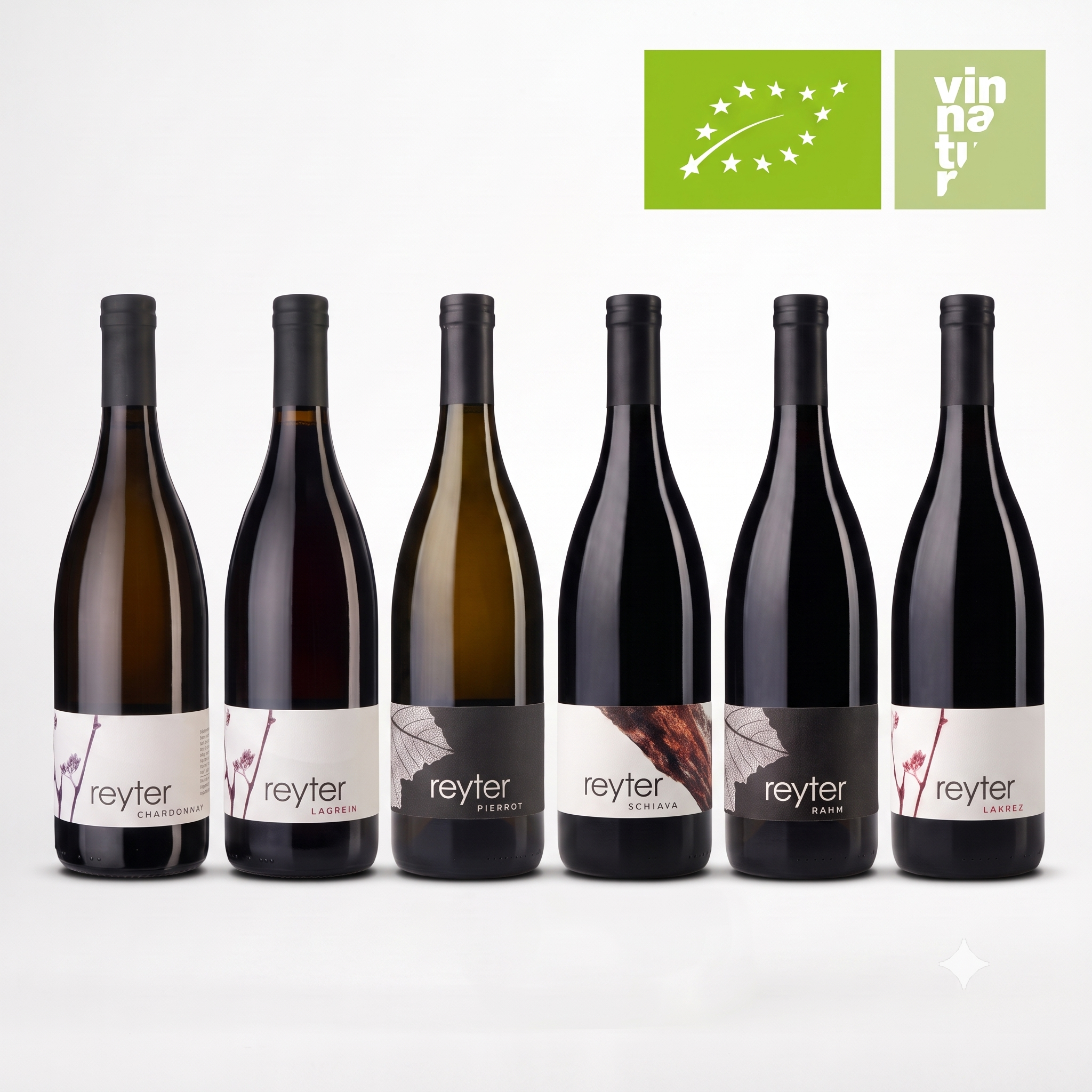
If any of that has you curious to actually taste the difference, the Reyter six-bottle case is the simplest way in — one bottle of each wine above, packed and shipped straight from Christoph and Joachim.
At the end of the day, these are some of the most delicious, clean, high-quality newest additions to our team of winemakers — another great small, independent winery we're proud to support!
0 comments